Assistant Project Manager
Practical guidance for managing RFIs, submittals, coordination, documentation, and the project details that keep work moving.
Control the details.
Protect the project.
Build Trust.
Assistant Project Manager
An Assistant Project Manager helps control the flow of information, approvals, and documentation that keeps a construction project moving.
While the Project Manager owns the contract, budget, and overall strategy, the APM helps make sure the systems behind those decisions work day to day.
This role is not just clerical or administrative. It is foundational. A strong APM understands how RFIs, submittals, coordination, documentation, and follow-up can affect schedule, cost, and risk long before those impacts show up on a report.

Core Responsibilities
The APM’s role is built around clarity, follow-through, and risk prevention.
Much of the work happens behind the scenes, but it directly affects field execution, schedule, cost, and project control.
Key responsibilities include:
- RFIs, submittals, and approvals
Keep information moving so the field is not waiting. - Logs and documentation
Maintain accurate records that protect the project and support decisions. - Team coordination
Help connect the field, Project Manager, design team, and subcontractors. - Procurement and long-lead tracking
Stay ahead of materials, approvals, and items that can affect the schedule. - Change and cost support
Help track changes, pay applications, and developing cost impacts. - Risk recognition
Identify scope, schedule, and information gaps early enough to act on them.
Reality:
Strong APMs do more than track information — they help prevent small issues from becoming project problems.
Common Challenges APMs Face
The APM role can become overwhelming quickly because information comes from every direction and priorities are not always clearly explained.
Common challenges include:
- Managing a high volume of information without losing priorities
- Becoming reactive instead of staying ahead
- Unclear expectations for responsibility and advancement
- Limited exposure to contracts, budgets, and decision-making
- Learning important lessons only after something goes wrong
The goal is not simply to become faster at processing information.
It is to understand what matters, what creates risk, and what needs action next.
Recommended Training & Resources
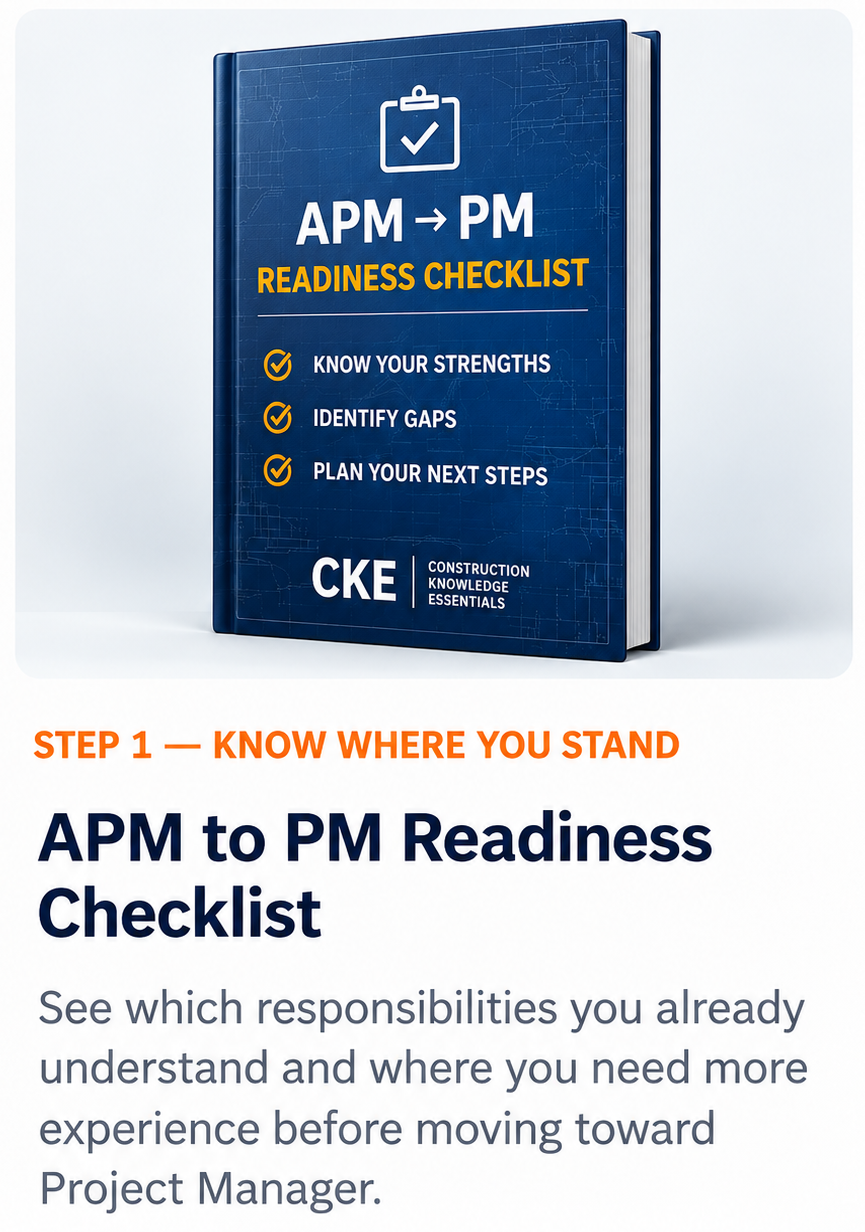
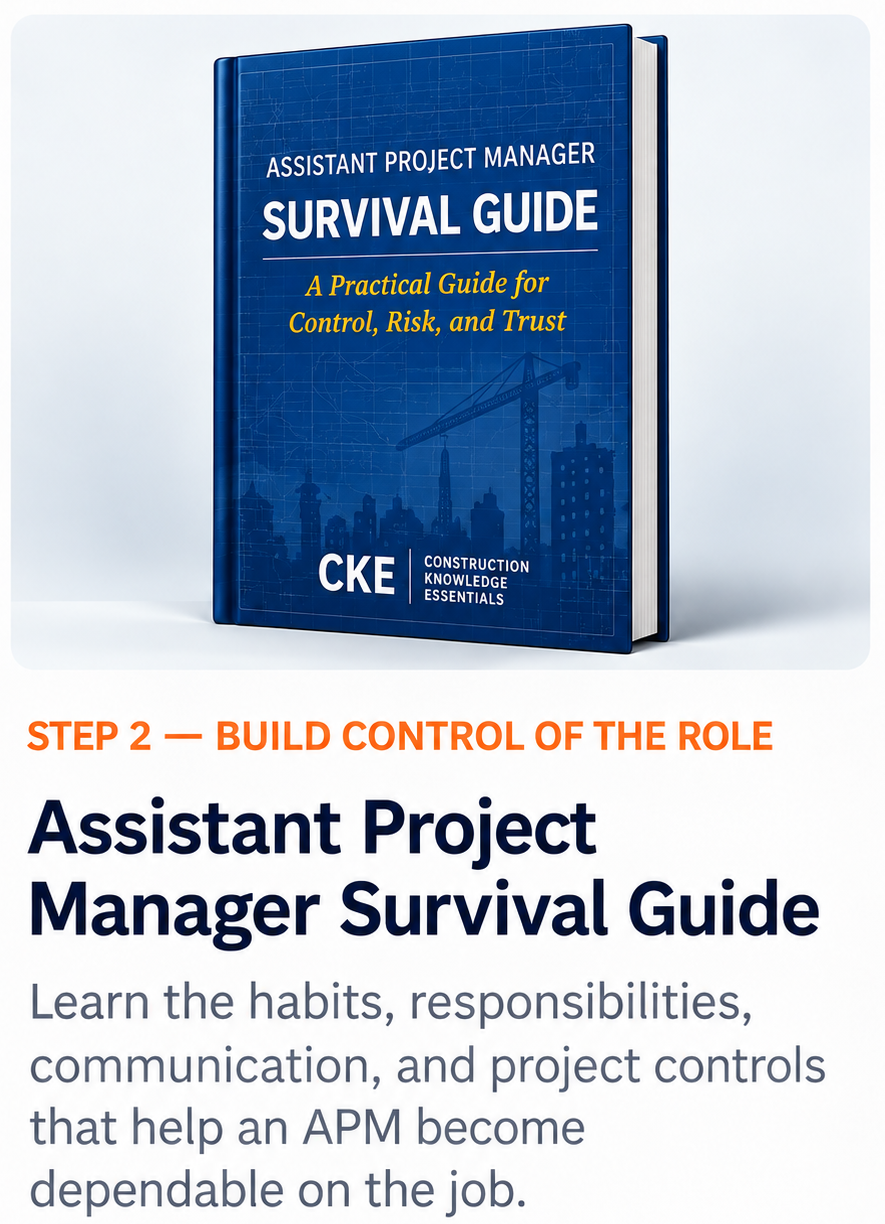
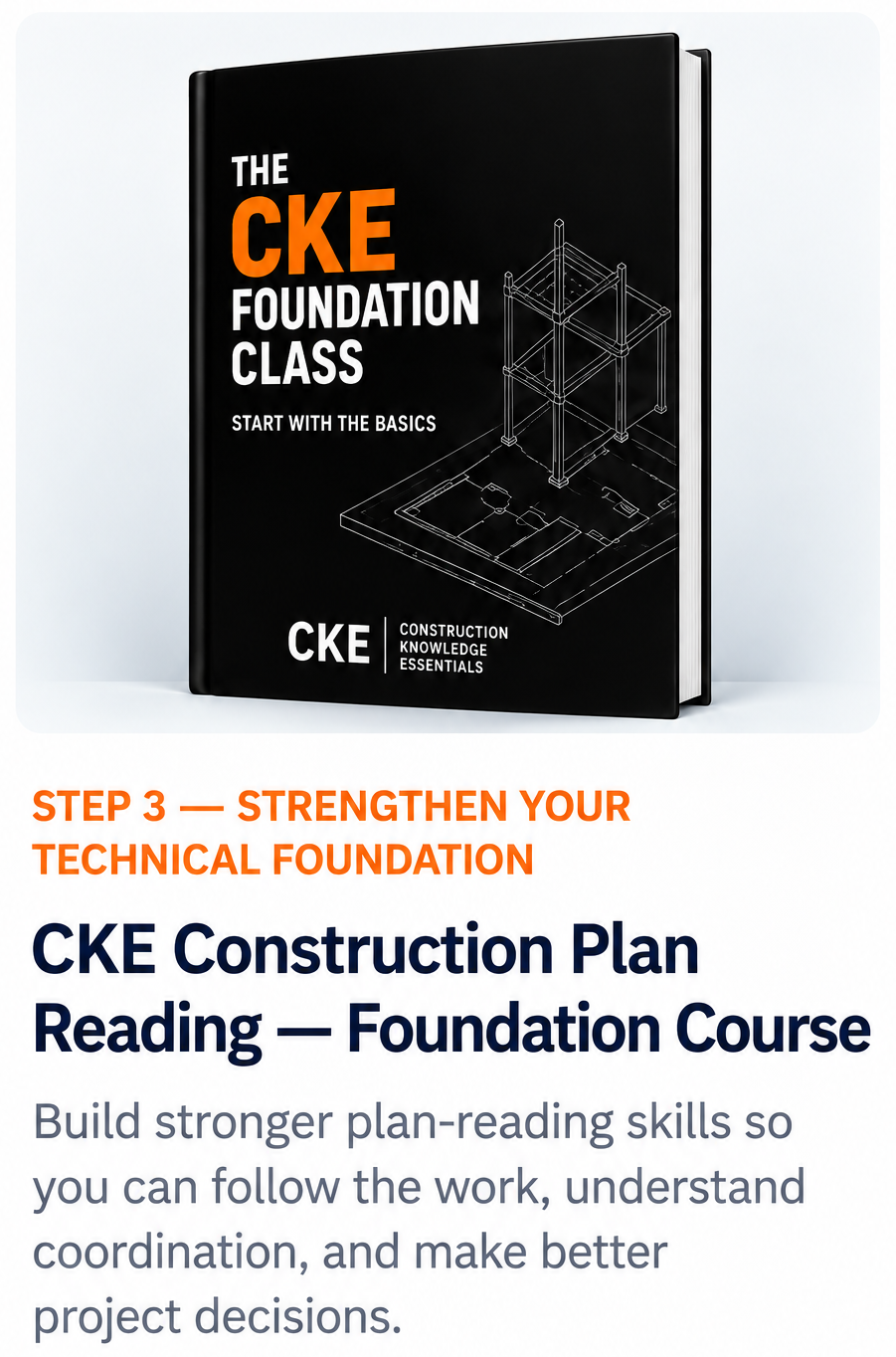
Start with where you are. Then build the knowledge and control that help you grow from APM toward Project Manger.
Control the details.
Protect the project.
Build Trust.
Practical resources, career guidance, and training built around real construction experience - for people working in the field, project management, and construction leadership.