
Superintendent
Control the Schedule, Coordinate the trades,
and lead the jobsite with confidence.
The Center of Gravity in the Field
If experience is the backbone of construction, then knowledge is the judgment behind it.
Superintendent
Everything happening in the field eventually connects back to the Superintendent — trades, schedule, inspections, safety, quality, materials, and the problems nobody saw coming.
A strong Superintendent knows:
- what is happening today
- what needs to happen next
- what could stop the work
- who owns the issue
They do not spend the entire day chasing fires.
They stay ahead of the work.
What Superintendents Actually Do
- Plan Ahead
Know what is coming before it reaches the field. - Coordinate the Trades
Make sure manpower, materials, information, and access are ready. - Control Quality
Catch issues before they are covered, rejected, or turned into rework. - Prepare for Inspections
Know what the inspector is coming to see before they arrive. - Protect the Schedule
Understand what is driving the job and what can knock it off track. - Document the Work
Keep clear records of progress, delays, inspections, conversations, and decisions.
Reality:
A Superintendent controls more than the work happening today - they protect what needs to happen next.
Core Skills Superintendents Must Build
- Look-ahead planning
- Trade coordination
- Schedule awareness
- Quality control
- Inspection readiness
- Safety leadership
- Construction plan reading
- Field documentation
- Problem recognition
- Decision-making
- Field-to-office communication
- Leadership under pressure
Recommended Next Steps
Supporting resources designed to strengthen execution and reduce avoidable misses.
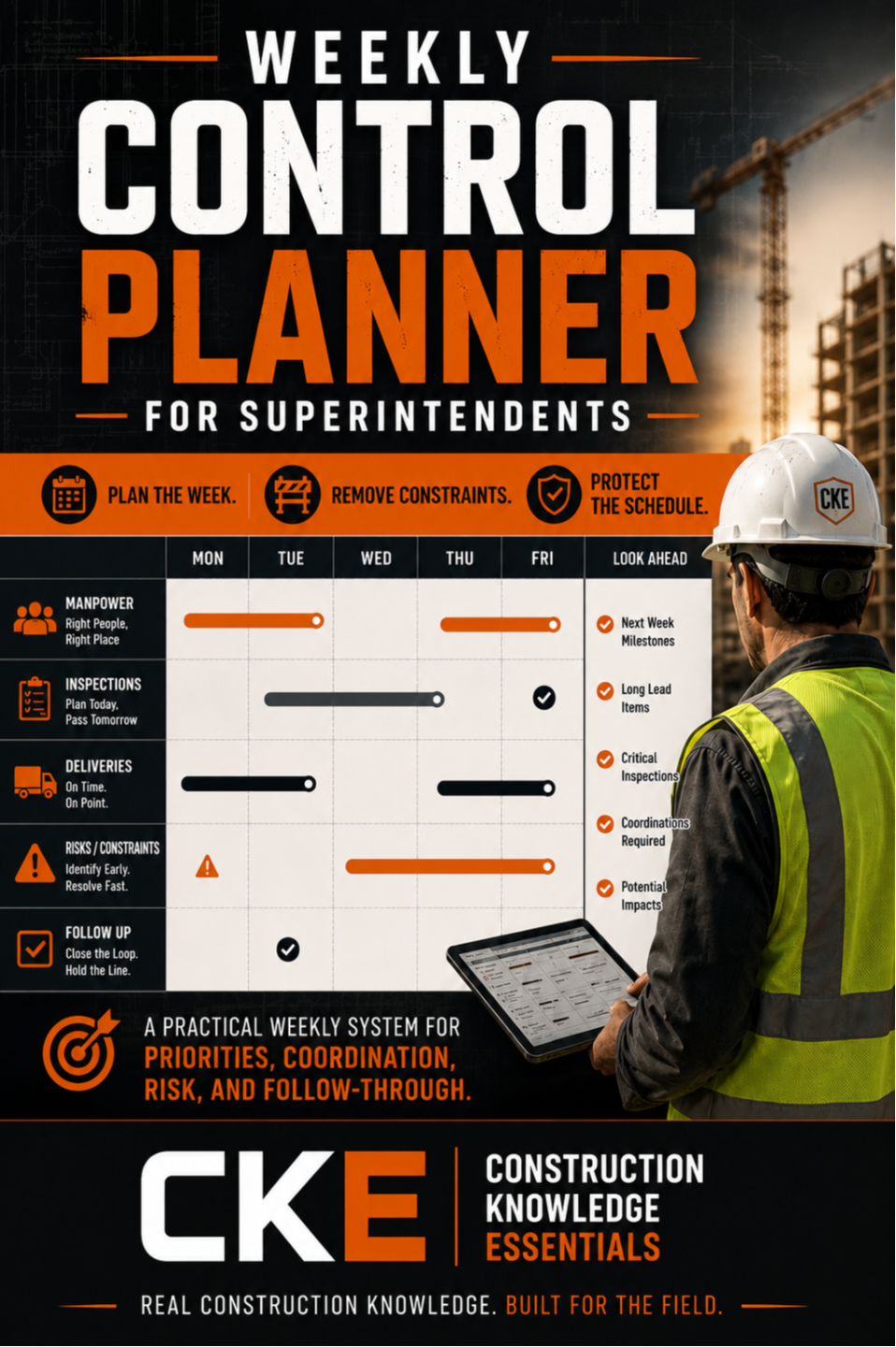
FREE
Weekly Control Planner for Superintendents
A weekly planning tool to verify readiness, align commitments, and maintain control in the field.
Download for Free →
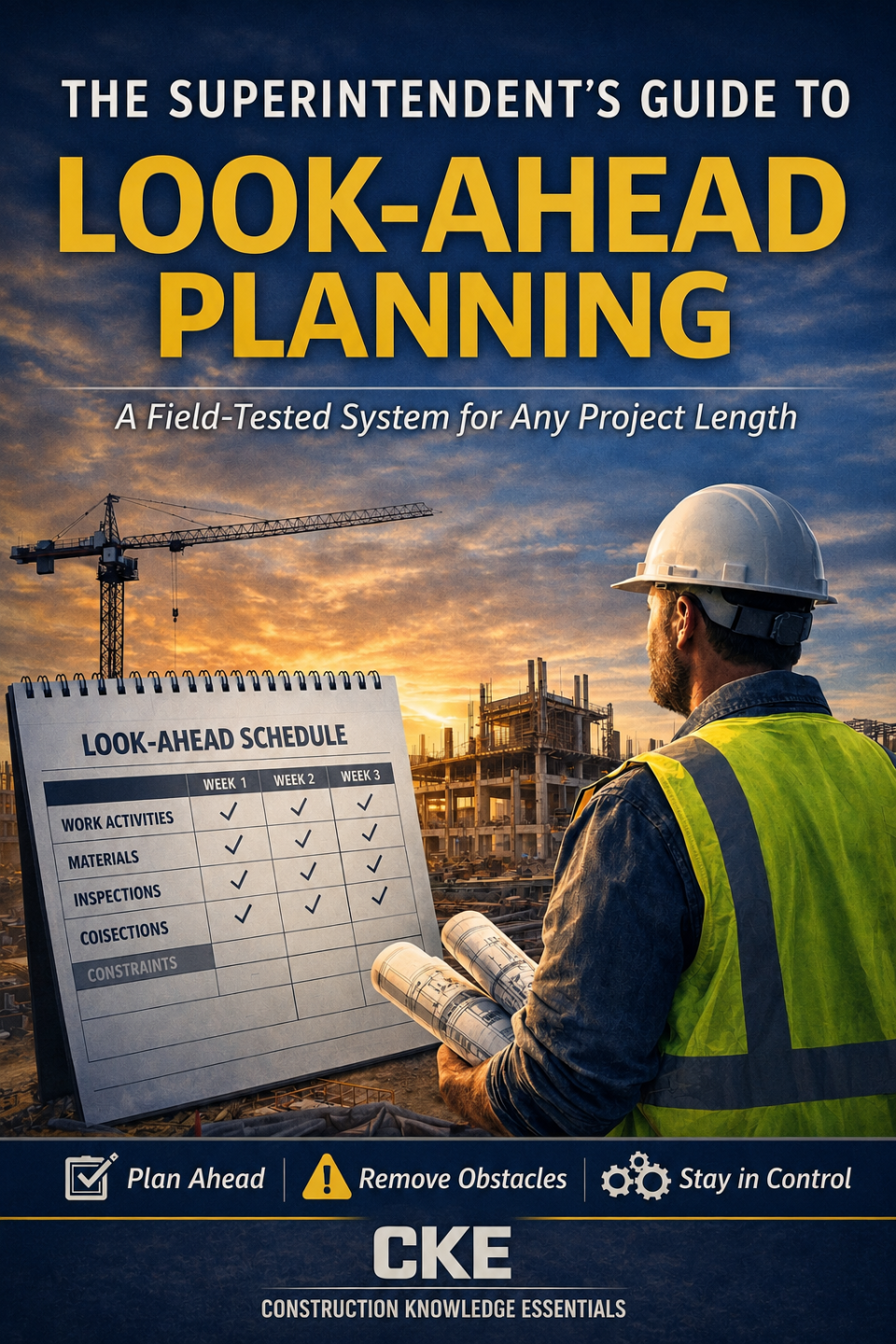
FREE
The Superintendent Look-Ahead Checklist
A field-ready checklist used to verify work readiness, expose constraints early, and prevent avoidable schedule disruption.
Download for Free →

Your First 90 Days As A Superintendent
Guidance for setting structure, priorities, and discipline early to prevent long-term issues.
$9.99 |Digital Download
Get the Guide →
PM ↔ Superintendent Rules of Engagement
84 pages designed to help you understand not only your own responsibilities, but how your decisions affect the person working on the other side of the project.
Two Critical Roles. One Project
$17.99 | Digital Download
Get the Guide →

The Superintendent Survival Guide
Field tested framework for maintaining control over safety, quality, schedule, and execution.
$17.99 | Digital Download
Get the Guide →

Practical resources, career guidance, and training built around real construction experience - for people working in the field, project management, and construction leadership.