Field Engineer
Build the plan-reading, coordination, and field documentation skills that start strong careers.
Learn the field.
Understand the information.
Become someone the team can depend on.
Field Engineer
A Field Engineer helps connect the construction documents to what is actually happening in the field.
You may be supporting layout, checking dimensions, tracking RFIs and submittals, documenting progress, coordinating with trades, and making sure the team is working from the right information.
The position can look like a lot of paperwork from the outside. It isn’t.
A good Field Engineer helps the project team catch problems earlier, communicate more clearly, and keep the work moving without unnecessary surprises.
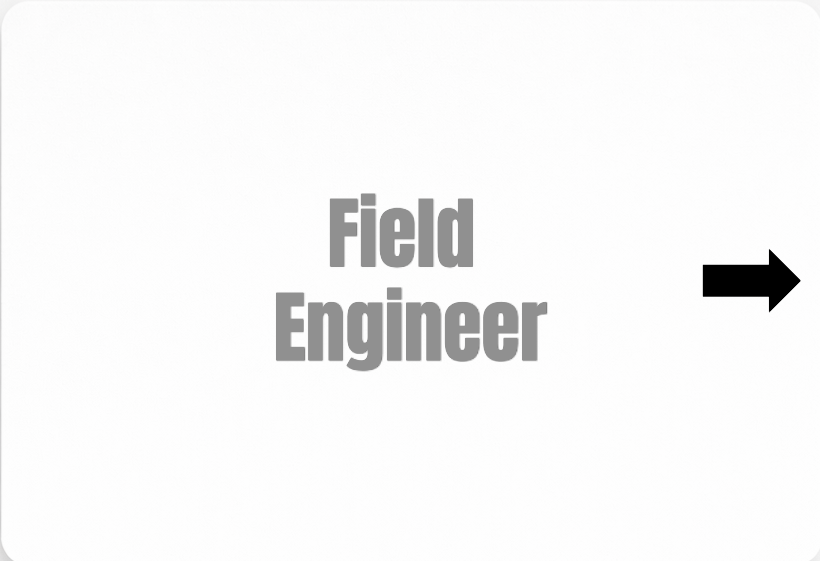
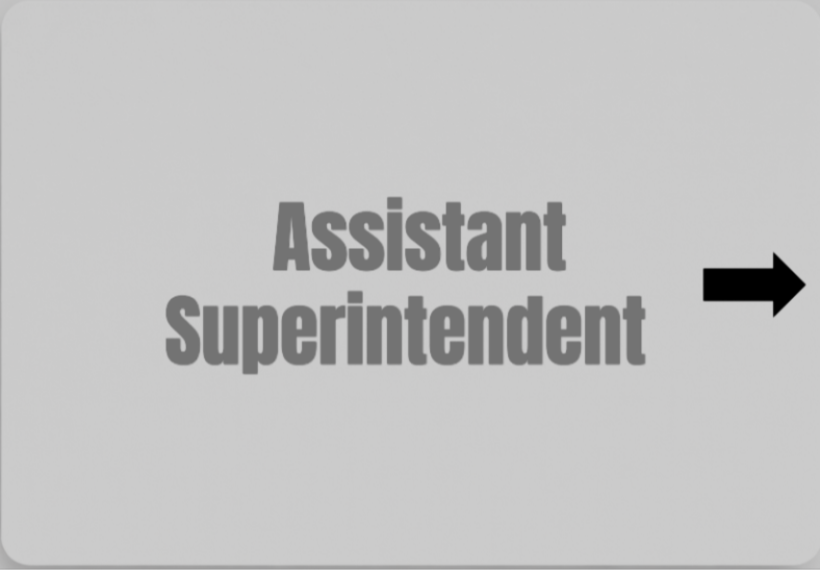
CAREER PATH
KEY RESPONSIBILITIES
What Field Engineers Actually Do
-
Layout & verification support
Help verify dimensions, control lines, benchmarks, elevations, and installation requirements before work advances. -
RFI support (not ownership)
Identify conflicts, gather the facts, and help get clear questions to the people responsible for providing answers. -
Submittal awareness
Know what has been submitted, what is approved, and what could affect upcoming work. -
Progress documentation
Maintain accurate daily records, photographs, quantities, manpower information, and field observations. -
Coordination follow-up
Help close the loop with trades on access, sequencing, information, and upcoming constraints. -
Document control
Help ensure the field is working from the current drawings, details, specifications, and approved information. -
Pre-install verification
Review details before installation begins so avoidable mistakes are caught before they become rework.
Reality:
Field Engineers create value by catching small problems before they become expensive ones.
Core Skills to Build
- Construction plan navigation — indexes, plans, sections, details, schedules, and callouts
- Construction math — dimensions, elevations, scale, tolerances, and basic quantities
- Documentation — daily reports, photographs, RFIs, submittals, and field records
- Field communication — ask clearly, confirm the answer, and close the loop
- Coordination awareness — understand how one trade affects the next
- Problem recognition — learn what needs attention now, what needs escalation, and what is simply noise
Recommended Training & Resources
There is much more in the Downloads & Courses sections if you want to learn more.
FREE
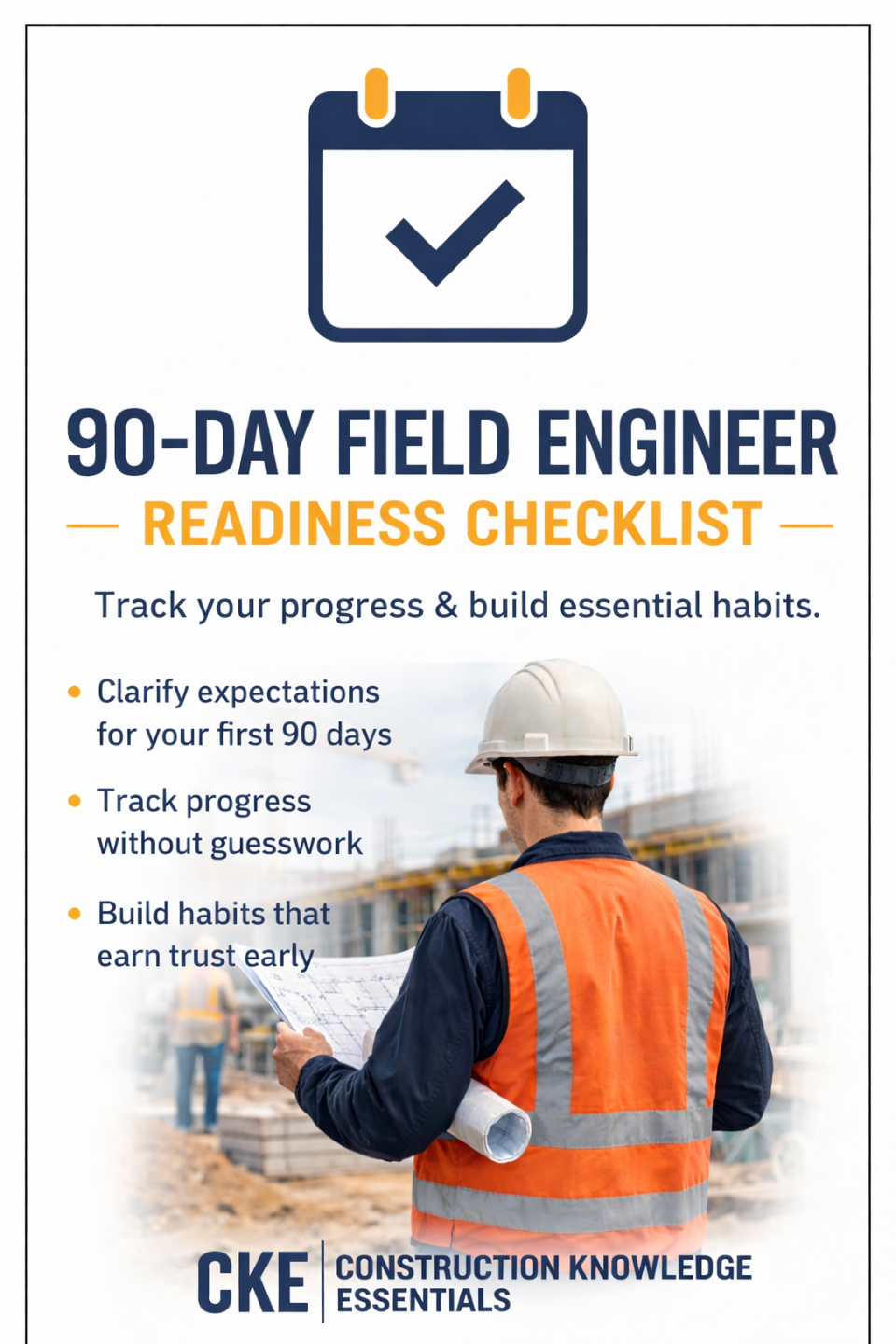
The 90-Day Field Engineer's Readiness Checklist
Best for knowing what to focus on first
A practical checklist to help new Field Engineers understand the habits, responsibilities, and knowledge they should begin developing during their first 90 days.
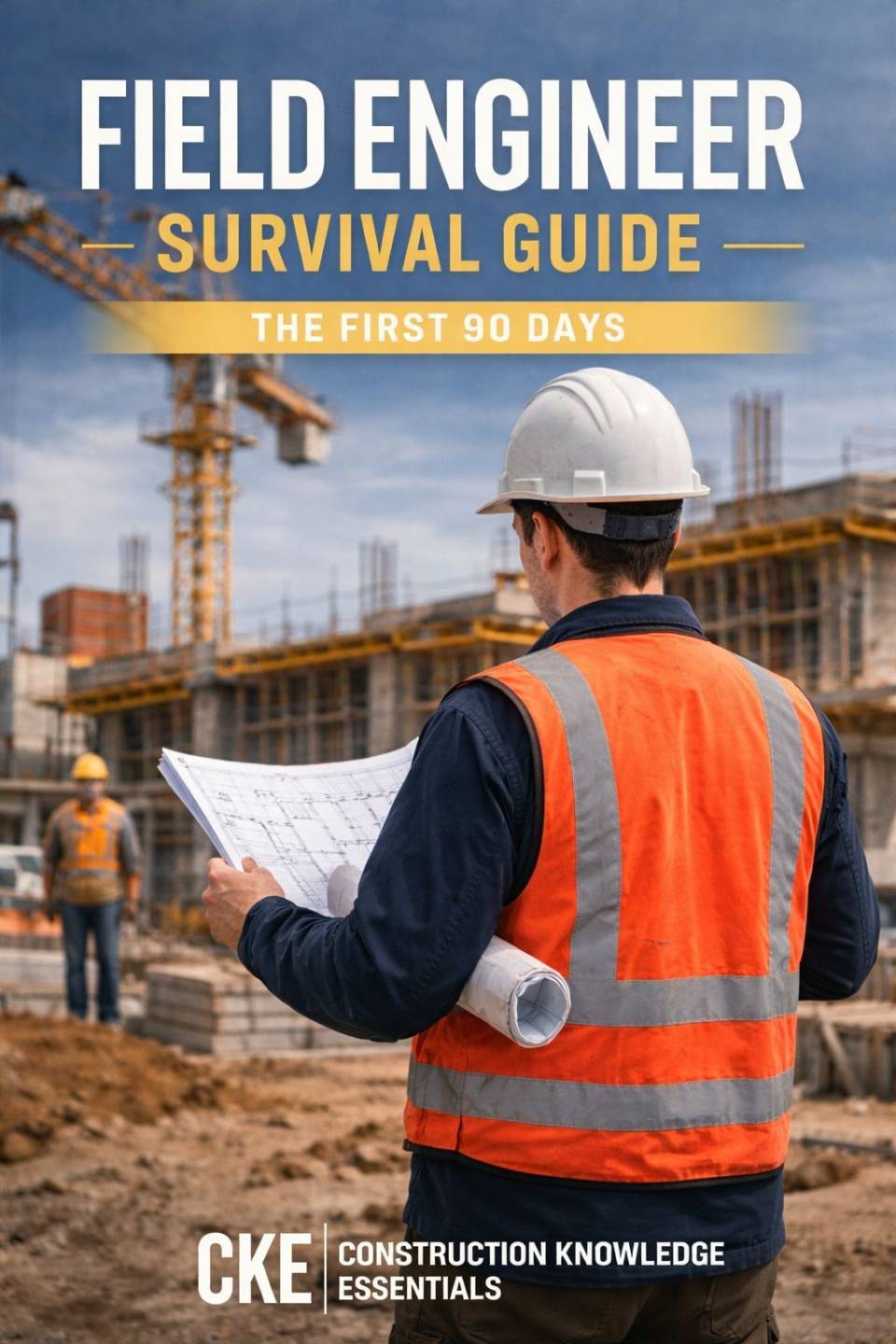
Field Engineer Survival Guide
Best for building confidence early
A practical field guide designed to help new Field Engineers understand their responsibilities, recognize what matters most, and avoid the mistakes that can slow down both their development and the project.
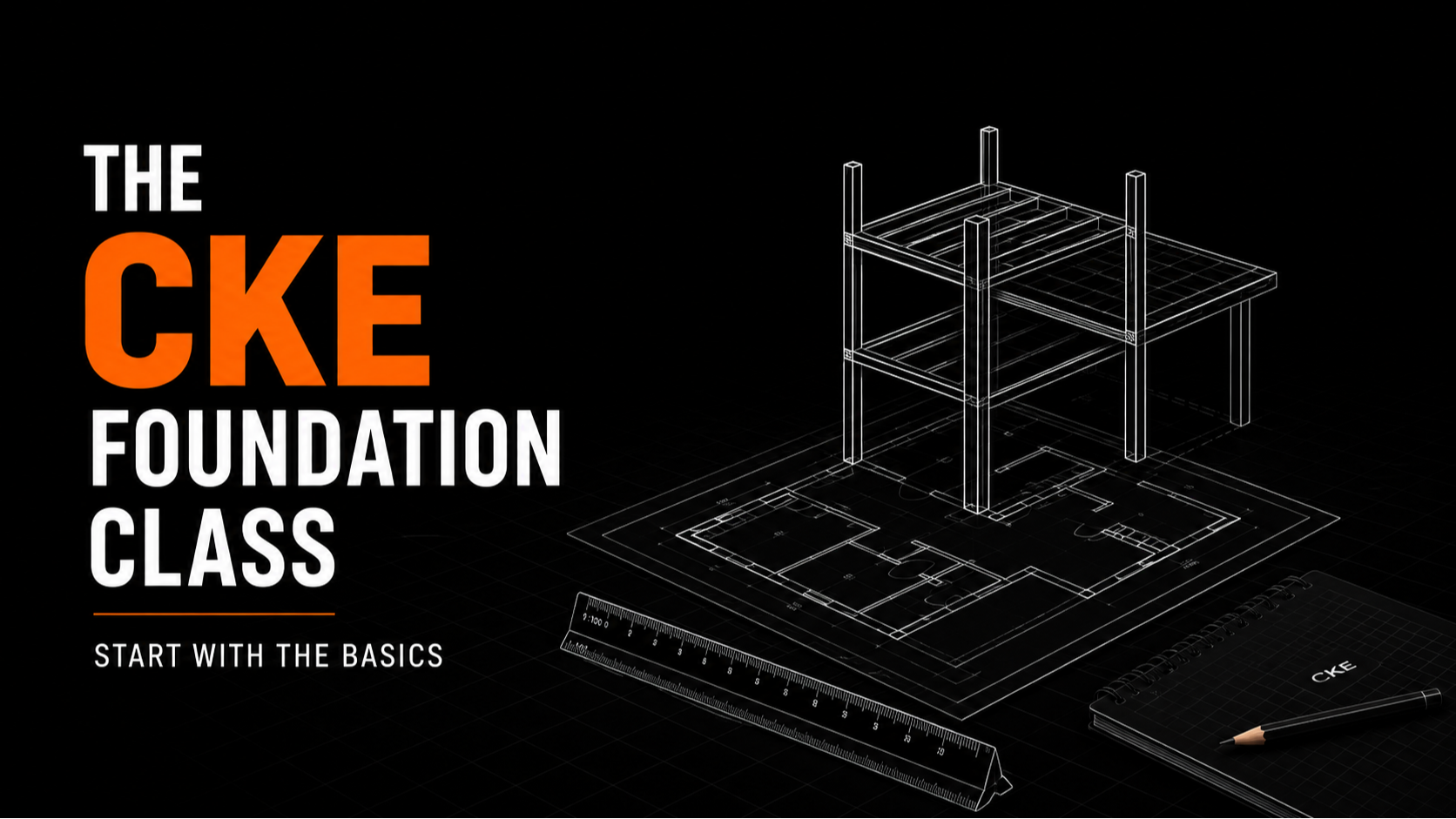
CKE Construction Plan Reading - Foundation Class
Best for building the basics
A focused introductory course designed to help you understand how a construction drawing set is organized, where information lives, and how to begin reading plans with more confidence.
$9 One-Time Purchase
Learn the field.
Understand the information.
Become someone the team can depend on.

Practical resources, career guidance, and training built around real construction experience - for people working in the field, project management, and construction leadership.